
Welcome to Ink and Spirits by NAIRA
Review a Book
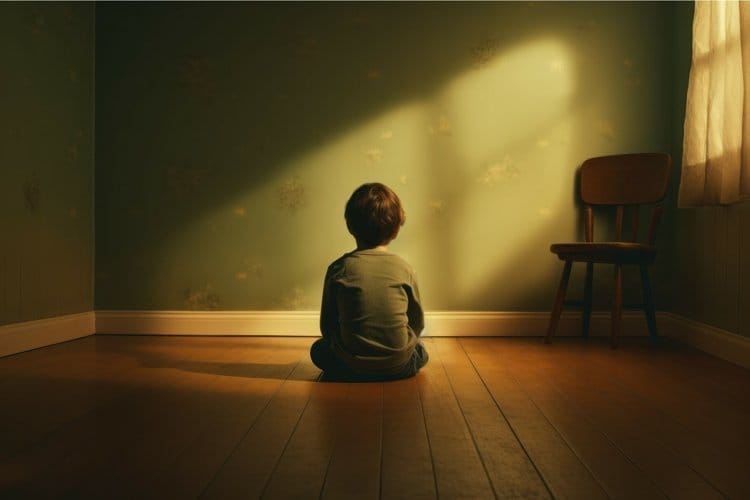
The conversation around abuse is often framed in simple terms—there is a victim and there is an abuser. One person hurts, and the other person inflicts the hurt. This dichotomy is clean, understandable, and emotionally easier to accept. Yet human experiences, especially those rooted in trauma, are rarely so straightforward. In Andre’s Story by Naira Khan, readers are given a rare and unsettling opportunity to look inside the making of an abuser—long before he ever becomes one. The narrative does not excuse harmful behavior; instead, it illuminates the psychological roots that lead a wounded child to become a dangerous adult. And in doing so, it opens an important discussion on why some abusers are also victims.
This is not a conversation meant to soften accountability. Rather, it is one that seeks to expand our understanding of abuse, healing, and the generational cycles that shape human behavior. It is a perspective that aligns closely with many concepts explored in trauma psychology blogs, particularly those that emphasize how early wounds, when left untreated, can manifest in destructive and harmful ways.
In Andre’s Story, the protagonist’s descent into violent and abusive behavior starts not with adulthood, but with childhood. A young Andre is not raised in a nurturing or emotionally safe environment. Instead, he experiences neglect, confusion, and inappropriate adult behavior long before he can understand what is happening.
Children who grow up in homes where emotional validation is absent learn one thing:
their feelings do not matter.
This emotional numbness becomes a seed that later grows into anger, defensiveness, or emotional detachment.
Research in developmental psychology shows that children who experience:
Neglect
Lack of affection
Boundary violations
Trauma or grooming
are more likely to internalize distorted beliefs about love, trust, and power. Andre’s early life reflects these findings. His story is dominated not by parental warmth but by instability, secrecy, and confusion—all of which lay the foundation for emotional dysfunction in adulthood.
Most abusers are not born violent—they learn violence. They absorb it from their surroundings, internalize it as normal, or use it as a survival mechanism. In Andre’s case, the inappropriate attention from an older man blurs his understanding of affection and boundaries. Instead of learning connection safely, he learns it through exploitation.
When a child is trained to suppress fear, shame, or pain, those emotions do not disappear. They simply settle deeper. Over years, these suppressed emotions may be expressed through rage, control, or emotional withdrawal.
This is where the painful truth emerges:
some abusers learned their behavior from what was done to them.
Not as a conscious choice, but as a psychological imprint.
This connection is discussed frequently in studies Fiction About Surviving Domestic Abuse, which show that individuals who grow up witnessing or experiencing harm often replicate those patterns later—even if they once vowed never to become like the adults who hurt them.
Children who experience deep emotional hurt often grow up feeling powerless. They were small, helpless, unheard. When they become adults, some attempt to regain the control they lacked—but in destructive ways.
In Andre’s adult life (as readers later see through its connection to Sun on Your Back), his abuse of power is not random. It is a distorted attempt to reassert control over an internal world that feels unsafe and chaotic.
Psychologists explain this behavior through a concept known as the power compensation response.
It works like this:
A child feels powerless.
They internalize fear and humiliation.
As adults, they search for ways to reverse that feeling.
Control becomes their way of coping.
Abuse becomes a maladaptive expression of that control.
This is why understanding an abuser’s background is not the same as forgiving their actions. It is an acknowledgment that the seed of harm was planted long before they ever hurt someone else.
One of the strongest thematic elements in Andre’s Story is its illustration of generational trauma—the idea that emotional wounds are passed down not just through actions, but through silence, neglect, and unresolved pain.
In Andre’s household, secrecy and emotional coldness appear to be generational traits. Abuse (whether emotional, psychological, or physical) does not exist in isolation. It travels through families like an invisible inheritance.
Generational trauma creates:
Dysfunctional communication
Emotional suppression
Fear of vulnerability
Distorted ideas about love and connection
Andre is a product of these patterns. His story is not just about one boy—it is about a legacy of emotional wounds that were never addressed.
Readers familiar with the author’s other works, particularly Sun on Your Back, will recognize how these cycles echo through families in her fictional world. The connection is clear: trauma lives in the spaces between the things families do not talk about.
A nuanced truth emerges here:
Understanding someone’s trauma does not absolve their actions, but it explains their behavior.
This is the delicate balance Andre’s Story achieves. Readers are invited to see André as a damaged child before they meet him as an abuser. This shift does not erase the harm he causes later—it contextualizes it.
This kind of storytelling serves two important purposes:
By showing the origins of his pain, the author helps us understand how a person’s early environment shapes their worldview.
By revealing the psychological roots of his actions, the story refuses to dismiss or minimize Andre’s harmful behavior. Instead, it demands that we confront the complexity of abuse: a person can be both victim and perpetrator.
Not everyone can read academic research on trauma or domestic violence. And even when they do, the emotional impact is limited. Fiction, however, creates empathy. It allows readers to step into the shoes of a character whose life is nothing like their own.
Andre’s Story succeeds in bringing awareness to hidden aspects of abuse:
The childhood origins
The emotional confusion
The social silence around grooming
The psychological unraveling that follows
These insights align with many themes explored in trauma psychology blogs, which emphasize how early experiences shape later behaviors.
Fiction becomes not just entertainment, but education. It opens conversations that might otherwise remain closed.
There is an essential takeaway from Andre’s story:
unhealed trauma does not disappear—it evolves.
It becomes anger, manipulation, self-loathing, or violence.
But trauma that is acknowledged, treated, and spoken about can be interrupted. Cycles can end. Patterns can be rewritten.
The story serves as both a warning and a lesson:
Abusers must be held accountable.
Their victims deserve safety and healing.
The roots of their behavior must be understood to prevent the pattern from repeating.
This understanding is not sympathy. It is insight.
It is how change begins.