
Welcome to Ink and Spirits by NAIRA
Review a Book
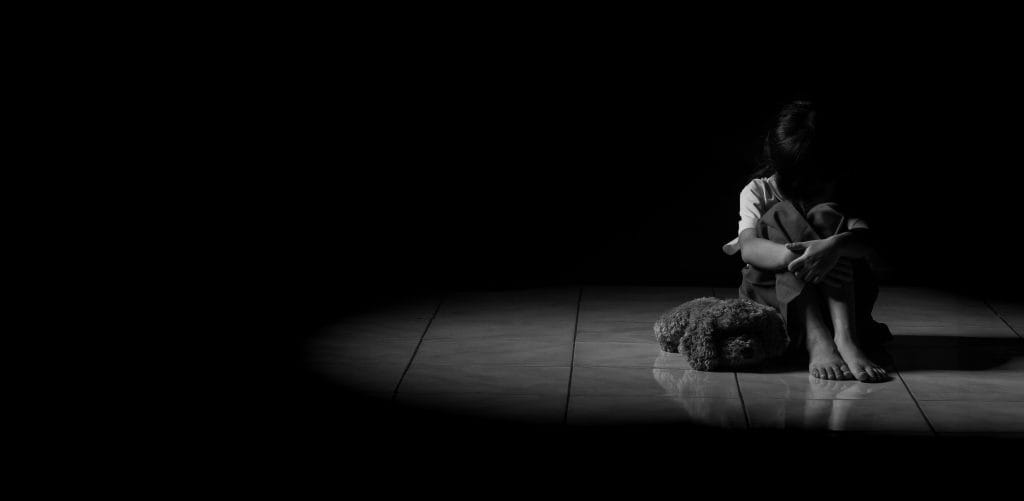
Some wounds bleed silently.
Some scars never show.
And some battles happen entirely inside a mind that learned—too early—that survival meant staying quiet.
Psychological trauma is one of the most misunderstood forms of human suffering. Unlike a broken bone or a stitched-up cut, there is no cast, no bandage, no visible evidence that something painful ever happened. People look fine on the outside. They function. They laugh. They go to work. They survive. And because they survive, the world assumes they’re okay.
But the truth is far gentler and far harsher at the same time: Family Secrets & Trauma: What Sun on Your Back Teaches Us About Generational Wounds
These are wounds created in moments when a child was scared but had no one to run to. When a teenager swallowed their pain because speaking would cause more damage. When an adult kept a straight face in situations that were anything but safe. These wounds live in the nervous system, the memory, the reactions, the voice that trembles before certain conversations.
And perhaps the hardest truth is this:
Many people don’t even realize they’re living with trauma until years later.
Not because they’re weak, but because they were taught that what happened to them “wasn’t that bad.”
If you’ve ever tried to explain psychological trauma—real, raw, lived trauma—you know how impossible it feels. You try to put words to something that never had language. How do you explain the way your heart races at certain tones of voice? Or why loud footsteps make your stomach twist? Or why love feels dangerous even when you desperately want it to feel safe?
People often dismiss these reactions because they can’t see the cause of the pain.
No bruises.
No documents.
No visible wounds.
But invisible wounds are still wounds.
Many survivors grew up in families where emotional suffering wasn’t acknowledged. Maybe the rule was to “be strong.” Or to “not make a scene.” Maybe the adults had their own pain and couldn’t handle anyone else’s. Maybe they were taught that therapy was for people who were “weak” or “overreacting.” So you learn to hide it. You learn to shrink. You learn to endure.
And this is where the generational cycle begins.
Every family has secrets. Some are small. Some are harmless. And some are the kind of secrets that shape entire bloodlines without anyone fully understanding why.
In works like Sun on Your Back, we are reminded of a powerful truth:
trauma rarely starts with one person.
It often begins with a parent, a grandparent, someone in the bloodline who never had the chance to heal. Their silence becomes the next generation’s confusion. Their pain becomes the next generation’s burden. Their unspoken stories become the next generation’s triggers.
Generational trauma doesn’t always look like dramatic events. Sometimes it looks like:
A parent who never expresses love because no one ever showed them how.
A caretaker who becomes emotionally distant because affection once hurt them.
A family that never discusses feelings because past wounds made vulnerability feel unsafe.
A household where secrets are kept to “avoid shame.”
A culture of silence that makes children believe they are overreacting, dramatic, or ungrateful.
Books like Sun on Your Back give us something rare: an honest look at how emotional wounds pass quietly from one generation to another, without bruises, without scars, without anyone realizing they are carrying inherited grief.
It reminds us that family secrets don’t disappear—they simply change shape.
What one generation hides, the next generation feels.
You can point to a broken leg.
You can show the stitches on your skin.
You can explain an accident, an injury, a surgery.
But psychological wounds live in places you can’t show anyone:
In your reactions
In your fears
In your relationship patterns
In the way you flinch at kindness
In the way you freeze when someone raises their voice
In the way you apologize for existing
And because you can’t show anyone, you often convince yourself it’s not real enough, not big enough, not valid enough to matter.
The truth?
Trauma doesn’t need to be visible to be real.
A child raised in chaos learns to expect chaos.
A child raised in emotional distance learns to fear closeness.
A child raised in silence learns to hide their voice.
These patterns follow you into adulthood, into relationships, into parenting, into moments where you suddenly realize: “Why do I react like this? Where did this fear come from?”
And the answer is often buried in the invisible wounds.
You may not remember every detail of what happened to you, but your body remembers the aftermath.
Psychological trauma can show up as:
Overthinking everything
Feeling unsafe when nothing is wrong
Shutting down during conflict
Difficulty trusting others
Feeling guilty for resting
Avoiding emotions because they feel overwhelming
Being overly accommodating
Feeling “too much” or “not enough”
Needing control to feel safe
Being terrified of abandonment
Feeling numb after years of survival mode
These aren’t personality flaws.
These are coping mechanisms.
These are survival strategies that once kept you alive.
Trauma responses are not failures—they are adaptations.
Society has a dangerous habit of believing only what it can visibly measure.
People think trauma must be dramatic to be real.
That it must involve violence or catastrophe.
That it must be memorable.
But psychological trauma doesn’t always leave you with one big memory. Often, it leaves you with thousands of small emotional bruises that accumulate over years.
The world is uncomfortable with emotional pain, so it minimizes what it doesn’t want to face. That’s why survivors often hear:
“You’re too sensitive.”
“It wasn’t that bad.”
“You’re exaggerating.”
“Other people have it worse.”
“You should be over it by now.”
But the absence of visible injury doesn’t mean the absence of suffering.
Just because it’s invisible doesn’t mean it’s imaginary.
If generational trauma wound us in silence, healing begins in truth.
Healing begins when you finally tell the story that scared you.
When you name the pain that never had language.
When you acknowledge what was missing just as much as what was done.
Healing is not about blaming your family.
It’s about understanding them—and understanding yourself—through the lens of compassion, boundaries, and truth.
Books like Sun on Your Back remind us that we inherit more than genetics.
We inherit emotional histories.
We inherit survival patterns.
We inherit fears and strengths and unspoken stories.
But the moment we recognize the pattern, we gain the power to end it.
You are not responsible for the trauma that was passed down to you.
But you are powerful enough to stop it from continuing.
Talking about psychological trauma is brave.
Acknowledging it is even braver.
Healing from it is revolutionary.
You don’t need visible scars for your pain to be valid.
You don’t need dramatic proof for your story to be believed.
Your experiences matter because you matter.
Your wounds matter even if no one sees them.
And you deserve healing—even if your trauma was invisible.