A place that feels like it is still remembering
There are some places you don’t just
see.
You feel them.
Great Zimbabwe is one of those places.
At first, it looks like old stone walls sitting quietly on the land. But the longer you think about it, the more it feels different. Like the place is not empty at all, like it is still holding voices, memories, and meaning inside its stones.
This is why Great Zimbabwe History is not just something you study. It is something you slowly experience.
And it is also why this ancient site still matters so much today.
A Powerful City from Ancient African Civilizations Zimbabwe
Long before modern cities and maps, Great Zimbabwe was a living, working, powerful city.
Between the 11th and 15th centuries, it grew into one of the most important centers in southern Africa. It was part of the great story of Ancient African Civilizations Zimbabwe, where trade, culture, and leadership were deeply connected.
People lived here in large numbers. They traded gold and ivory. They connected with distant regions through long trade routes. Life was organized and active, not isolated or simple as some older histories once suggested.
This is important because it changes how we understand Africa’s past.
Great Zimbabwe was not a mystery land on the edge of the world.
It was a center of life, power, and culture.
The Stones That Built A City Without Cement
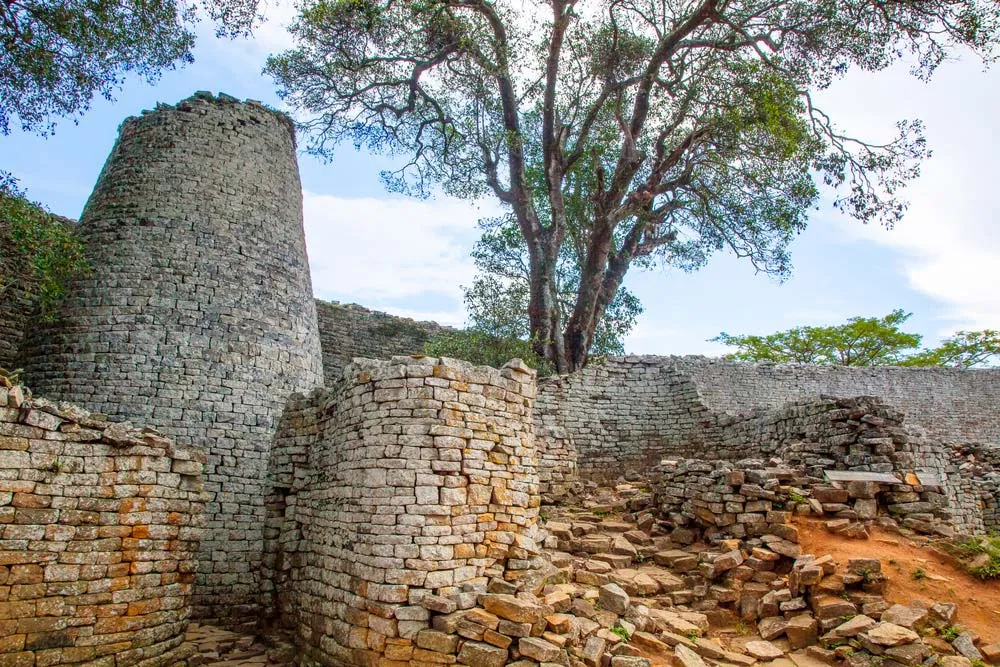
One of the most striking parts of the site is its construction.
When you look at the Zimbabwe Stone Ruins History, the first question that comes to mind is simple:
How did they build this?
The answer lies in one of the most impressive building styles in history, Shona Stone Architecture.
The builders carefully selected and shaped granite stones. Then they stacked them so precisely that the walls still stand today, without any cement or modern tools.
This is not just construction.
It is skill, patience, and knowledge passed through generations.
This is why Great Zimbabwe Architecture Meaning is so important. It is not only about buildings. It is about intelligence, teamwork, and a deep understanding of structure and land.
Even today, architects study it with respect.
Three Parts of A Living City
Great Zimbabwe is usually understood through three main areas:
- The Hill Complex
- The Great Enclosure
- The Valley Ruins
Each part has its own feeling.
The Hill Complex sits high and feels powerful, almost like a place for leaders or spiritual purpose. The
Great Enclosure is the most famous, with massive curved walls that create a sense of mystery and protection. The Valley Ruins spread below, showing where daily life once happened.
Together, they show that this was not just a settlement.
It was a fully developed city.
Symbolism of Great Zimbabwe: Meaning Hidden in Stone
This is where Great Zimbabwe becomes even more interesting.
Because it is not only about structure, it is about meaning.
The Symbolism of Great Zimbabwe is still studied today, and while we don’t have all the answers, we have strong ideas.
Some researchers believe the stone walls represented royal strength and authority. The enclosed spaces may have marked social or sacred areas. The layout of the city may reflect how people understood order, leadership, and community.
Even the famous conical tower inside the Great Enclosure raises questions. It does not have a clear practical use, which makes many believe it held symbolic or ritual meaning.
Nothing here feels accidental.
Everything feels intentional.
Great Zimbabwe Ruins Facts that Reshape History
When people learn Great Zimbabwe Ruins Facts, they are often surprised:
- It was one of the largest ancient cities in southern Africa
- It supported thousands of people at its peak
- It was a major center of trade and economy
- It was built entirely using local stone
- It existed long before European colonial influence
These facts are important because they correct old misunderstandings about African history.
They show that African societies built complex, organized, and advanced civilizations long before modern records.
UNESCO Great Zimbabwe Site: Protecting Human Heritage
Today, Great Zimbabwe is recognized as a
UNESCO Great Zimbabwe Site.
This means it is protected as part of global heritage.
But protection is not just about preserving stones.
It is about preserving identity.
It ensures that future generations can understand and learn from this important part of African Heritage Sites History.
It also helps the world see Great Zimbabwe not as a forgotten ruin, but as a key part of human civilization.
Zimbabwe Cultural Landmarks and Living Connection
Great Zimbabwe is not frozen in the past.
It is still part of living culture.
As one of the most important Zimbabwe Cultural Landmarks, it continues to hold meaning for people today.
Local communities still connect with its history. Stories are still shared. Respect for the site is still present in cultural memory.
This is where history becomes something personal.
Not just something written in books, but something carried in identity.
Secrets of Great Zimbabwe: Questions that Remain
Even after years of research, many Secrets of Great Zimbabwe remain unsolved.
We still ask:
- Why was the city eventually abandoned?
- How exactly was its society organized?
- What rituals or ceremonies happened inside its walls?
- What deeper meaning did its layout hold?
We have theories, but not full answers.
And that uncertainty is part of what keeps this place so powerful.
It still invites curiosity.
It still invites imagination.
Historical Sites in Zimbabwe: A Wider Story
Great Zimbabwe is one of the most important Historical Sites in Zimbabwe, but it is part of a much larger heritage landscape.
Across the country, there are many other ancient sites, rock formations, and cultural landmarks that tell the story of human life, creativity, and survival.
Together, they show that Zimbabwe is not just a place of modern history, it is a land deeply rooted in ancient civilization.
The Stories These Stones Still Hold
This is where the title truly comes alive.
Because Great Zimbabwe is not only about stones.
It is about stories.
Some stories come from archaeology. Some come from oral tradition. Some come from interpretation. And some come from the feeling people get when they stand there and try to imagine what once was.
The stones hold stories of:
- Power and leadership
- Trade and connection
- Daily life and community
- Belief systems and rituals
- Identity and belonging
Even today, the site feels like it is still telling them.
Just in a quiet way.
Why Great Zimbabwe Still Matters Today
In a fast-moving world, places like this slow us down.
They remind us of simple but important truths:
- Civilizations are built with knowledge and effort
- Culture carries meaning across generations
- Architecture can hold history and symbolism
- The past is not gone, it is still present in memory
Great Zimbabwe is not just a ruin.
It is a message.
A reminder that human history is deep, complex, and full of stories we are still learning to understand.
Final Reflection
Great Zimbabwe is more than an ancient site.
It is a conversation between the past and the present.
The stones still stand.
The symbols still raise questions.
And the stories still exist, waiting to be understood, remembered, and passed on.
Because some places don’t lose their voice.
They simply learn how to speak through time.
Great Zimbabwe is more than history; it’s a living story carved in stone. If this narrative resonates with you, explore more reflections and storytelling pieces on our
Destiny Motif’s blog, where history, memory, and human experience continue to unfold through the lens of Destiny Motif.