
Welcome to Ink and Spirits by NAIRA
Review a Book
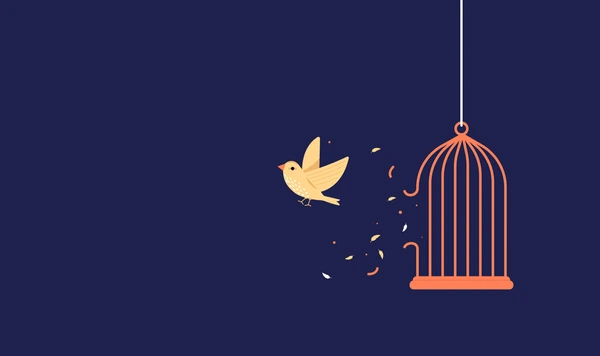
Manipulation rarely begins with control — it begins with charm.
The people who later drain your energy, silence your voice, or make you question your worth often start as the ones who seem to understand you best. They listen, empathize, and mirror your emotions. They become who you need — until you start to realize that what you’re giving away is more than attention. It’s power.
Learning to recognize emotional predators is not about becoming suspicious of everyone; it’s about learning to protect your peace. It’s about seeing the patterns that disguise control as care and possession as passion. Most importantly, it’s about reclaiming the parts of you that manipulation tries to rewrite.
Emotional predators don’t announce themselves. They’re not always loud or visibly cruel. Many are gentle, intelligent, and deeply persuasive. Their strength lies in their ability to sense your vulnerabilities — your loneliness, your empathy, your desire to be seen — and use them as doorways.
They build connections that feel magnetic, but beneath the surface, something begins to shift. You start apologizing for things you didn’t do. You feel responsible for their moods. You stop trusting your instincts because they’re constantly being questioned.
This is not love. It’s a slow erosion of self.
In Predators and Prey: A Tale of Power and Vulnerability, this dynamic is explored with haunting accuracy — revealing how power operates not through overt aggression, but through the quiet, calculated manipulation of another’s emotional landscape. The story serves as both mirror and warning: when power hides behind empathy, it becomes the most dangerous form of control.
Manipulation doesn’t always look the same, but it often follows predictable stages. Recognizing these patterns early can make all the difference:
In the beginning, you’re seen as perfect. Every word you speak is met with admiration. They shower you with validation — you’re different, no one understands me like you do.
This phase creates dependency. It floods your system with dopamine and attachment. You begin to crave their approval because it feels like safety.
Once your trust is secured, the tone changes. The compliments slow down, replaced by subtle criticism or comparisons. You find yourself working harder to earn back what once came freely.
This keeps you hooked — chasing the version of them that once made you feel whole.
They begin to distort reality. When you bring up concerns, you’re told you’re overreacting or imagining things. They deny facts, twist events, and reframe your emotions as irrational.
Soon, you start doubting yourself instead of the situation. That’s when manipulation has fully taken root.
By now, they control the narrative — and often your emotions. You feel guilty for setting boundaries, afraid of losing them, even when you’re the one being hurt.
This is where many people feel trapped — emotionally, psychologically, sometimes even spiritually.
When you live under emotional manipulation, your self-concept begins to fracture. You start second-guessing your own memories. The world feels foggy, uncertain. You can’t tell whether your pain is valid or exaggerated.
This confusion is not accidental — it’s part of the predator’s design. Their survival depends on your compliance, and your compliance depends on your doubt.
You may tell yourself, maybe they didn’t mean it, maybe I’m too sensitive. But that internal conflict is the proof of manipulation itself — the endless loop of self-blame that keeps you from walking away.
As Predators and Prey so powerfully depicts, this cycle of control is less about dominance and more about imbalance — about what happens when empathy becomes exploitation. It shows that power and vulnerability are two sides of the same coin, and that the line between protection and possession is dangerously thin.
Awareness is the first step toward freedom. Here are some signs you may be caught in a manipulative dynamic:
You often feel drained after interactions.
You apologize frequently, even when you haven’t done anything wrong.
You’ve stopped sharing your opinions because they’re often dismissed or twisted.
You feel anxious or guilty about setting boundaries.
You’re walking on eggshells to avoid emotional explosions.
You find yourself explaining or defending your reality constantly.
If any of these resonate, know this: your intuition isn’t lying to you. Manipulation works precisely because it makes you question your inner voice — but that voice is your way out.
Breaking free from emotional predators isn’t only about leaving — it’s about unlearning. It’s about re-teaching yourself what healthy connection feels like after being conditioned to accept pain as normal.
When you’ve been gaslighted, your sense of truth becomes shaky. Start small: keep a journal, note conversations, validate your emotions through self-reflection or trusted friends. Repetition restores clarity.
Boundaries are not barriers; they’re definitions of self. They teach others how to treat you and remind you that you have permission to protect your energy.
Isolation feeds manipulation. Find those who listen without judgment — friends, family, or therapists who reflect your worth rather than question it.
You don’t owe anyone endless justification for your feelings. Manipulators thrive on explanations — they twist them into new openings for control. Short answers and firm limits are acts of self-respect.
The hardest part of leaving manipulation is forgiving yourself for staying. Remember: you didn’t stay because you were weak. You stayed because you cared, because you hoped, because you were human. That’s not a flaw — it’s proof of your capacity to love.
Freedom doesn’t feel like fireworks. It feels like silence — the kind that’s both terrifying and holy. You may feel lost at first, unsure of who you are without their influence. But slowly, that quiet becomes peace.
You start recognizing your own reflection again. You speak without fear of contradiction. You laugh without guilt. You realize that the world didn’t end — it just began again, on your terms.
Healing after manipulation is not about vengeance. It’s about returning to yourself.
And that’s where vulnerability, the very thing that made you prey, becomes your superpower. Because it takes immense courage to stay open after being broken — to keep believing in love, truth, and kindness, even after someone weaponized them against you.
As Predators and Prey: A Tale of Power and Vulnerability reminds us, the line between victim and survivor is drawn not by what was done to you, but by your decision to rise anyway.
Manipulation is the theft of clarity. Emotional predators survive by convincing you that your reality isn’t real. But no one can own your perception — not forever.
You have the right to walk away from confusion, from guilt, from control disguised as care. You have the right to rebuild your voice, your peace, and your power.
And perhaps most importantly, you have the right to trust yourself again. Because once you recognize manipulation, it can no longer own you. The illusion breaks — and so does the chain.