What happens when someone we admire acts against the values we associate with them—and what do we do with that discomfort?
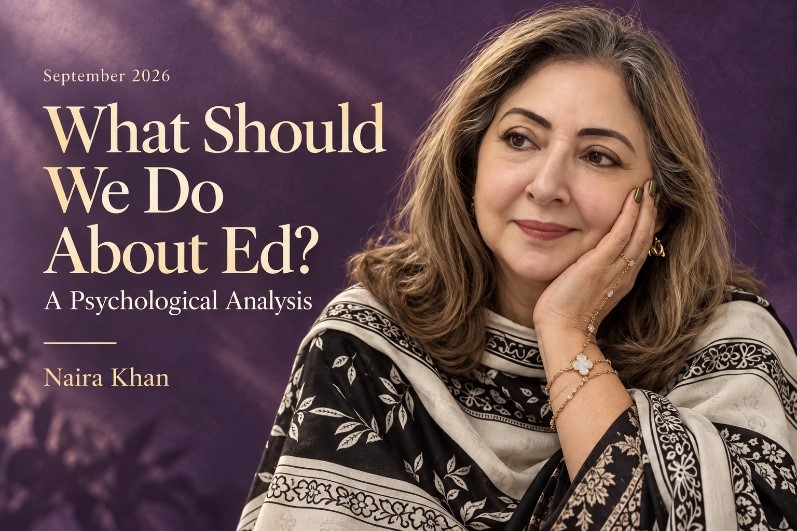
Dear readers,
I have returned to a question this month: what happens when someone we admire makes a decision that seems completely at odds with what we thought they stood for?
Who calls the shots?
The Ed Sheeran tour organisers removed Macklemore from the tour after he expressed support for Palestine. One by one, the remaining opening acts withdrew in solidarity. His backing band, Beoga, followed. Sheeran said the promoter decided after venues threatened to cancel the shows. Other musicians withdrew in solidarity with Macklemore and the children of Gaza. [1]
On 19 September, Sheeran walked onto the stage in Philadelphia alone.
The concert went ahead. The controversy did not disappear.
And then came the apology.
Some listeners heard enough to forgive. Others were left asking: what exactly was he apologising for, and what had changed?
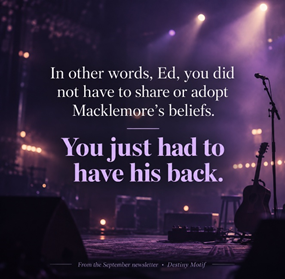
My problem is this: why could he not stand up for his opening acts? I think many people expected him to.
As a psychologist, I want to understand how people respond and how power shapes their choices. We cannot read anyone’s mind. We can listen to their explanations and ask what their decisions mean for others.
When admiration becomes disappointment
Music becomes part of our lives. It accompanies weddings, grief, journeys, and the ordinary days we later remember with tenderness. Through that familiarity, we may come to feel that we know the person singing.
When their behaviour clashes with what we thought they stood for, the disappointment can feel personal. We admire the artist, but we struggle to accept what they have done. Psychologists call that uncomfortable clash cognitive dissonance.
There are several ways we can respond. We may defend the artist, downplay the decision, or search for an explanation that allows us to continue believing in them. We may change our opinion. We may still love the music while disapproving of the behaviour. Or the behaviour may cross a line that permanently changes how we feel about the artist. People move between these responses; fans do not all think alike.
In his later remarks, Sheeran described Israel’s actions in Gaza as “catastrophic and unjustifiable and disproportionate” and said he was “making mistakes”. Those words matter. [2] But they leave a further question: which decisions does he now believe were wrong?
Regretting a decision, regretting how it was explained, and regretting the public reaction are not the same thing. People looking for an explanation need to know which of these he means. He has not said that he regrets failing to stand up for his opening acts.
Notice how the focus shifts. The protest was about Palestinian freedom and what the protesting artists described as genocide. Sheeran’s earlier explanation centred on keeping politics out of his concerts. [1] His later remarks turned to his mistakes and his condemnation of Israel’s actions. [2] These statements address different questions.
For me, the danger is that the Palestinian cause gets pushed into the background while we debate the artist’s intentions and distress. “Disproportionate” condemns the scale of the violence, but it does not answer the allegation of genocide. The language has changed, yet the central question raised by the protest remains unanswered.
His condemnation matters. So does asking whether he has addressed what people were protesting about, or mainly explained why he found himself in difficulty. Words cannot prove sincerity, but they can show us what someone is willing to name publicly and stand by.
This returns me to the language of violence. Let me begin with an example. Describing sexually abused children as “underage girls” can make them sound closer to adulthood, pushing their vulnerability as children into the background. Words shape how we understand harm. In a similar fashion, calling events only a “conflict” or “tragedy” can also blur who is doing what to whom. These are unique experiences, but both show why it matters what we name and what we leave out.
Who has the power to silence?
Saying that the decision to fire Macklemore was made by the venues and promoters tells us where some of the power lies. Those who control a stage decide who gets heard. They can tell performers that keeping their place depends on what they say. We still need to ask what everyone else could have done.
This reminds me of the barriers women can face when they report abuse. A woman speaks, but the organisation she reports to decides whether to investigate her complaint, grant her a hearing, or put her job at risk. Attention can shift from what happened to her to the trouble her complaint causes the organisation.
Despite varying experiences, the question about power remains constant: who determines whether someone is heard, and who accepts the consequences of speaking?
Responsibility can also be passed around, each person pointing to somebody above them while the person who spoke bears the consequences.
What does it cost to stand by someone?
I do not doubt that Ed Sheeran cares about people. His performance at the Concert for Ukraine in 2022 is one example of him using his music to help. [3]
That history makes the present controversy harder for some listeners to understand.
Cancelling or moving shows would have cost money and disrupted plans for workers and fans. We do not know the contracts or the full bill. But someone with his success has far more room to absorb a financial loss than most people.
Going ahead carried costs, too. What about his reputation? The trust of his followers? The possibility that people would stop buying tickets, playing his songs, or recommending his music?
There are already signs of that response. In Ireland, Classic Hits Radio announced that it was removing his music from its playlist, citing listeners’ reactions and support for the Irish artists who had withdrawn. [4] That does not tell us what everyone in Ireland thinks, but it shows that the backlash has gone beyond angry comments online.
We cannot yet know how much lasting support he will lose. But the decision involved more than the cost of cancelling a concert. Money can be earned again. Lost trust may be much harder to recover.
Someone can care and still make a decision that hurts others. That is the gap I want to understand. With his success and following, audiences might reasonably expect him to have considerable power to push back. Why did that power not lead to a different outcome?
What do we do with our disappointment?
We do not have to erase what an artist’s music has meant to us to question their conduct. Liking someone does not mean we must accept an explanation that leaves our questions unanswered.
We can ask for clearer answers, recognise genuine change when it comes, and decide for ourselves what we are willing to support.
But as the discussion turns towards the artist’s feelings and future, we must keep returning to the people whose suffering prompted the protest. Palestinians should not disappear from a conversation that began with someone speaking for their freedom.
For me, the question that remains is this: when speaking involves a cost, who must bear it—and who holds the power to offer help?
Warmly,
Naira
References
1. Pitchfork — Ed Sheeran’s Tour Openers, Backing Band Resign After Macklemore Removal — includes Sheeran’s earlier statement.
2. Reuters — Ed Sheeran calls Israel’s treatment of Gazans unjustifiable, apologizes for Macklemore controversy — later remarks reported 20 September, updated 21 September 2026.
3.ITV News — Concert for Ukraine raises millions for humanitarian effort — 29 March 2022.
4. The New Arab — Ed Sheeran faces fresh backlash as Irish radio station drops his music — 17 September 2026; includes the station’s statement.
5. BBC News, “Everything we know about the Ed Sheeran and Macklemore controversy,” September 2026