
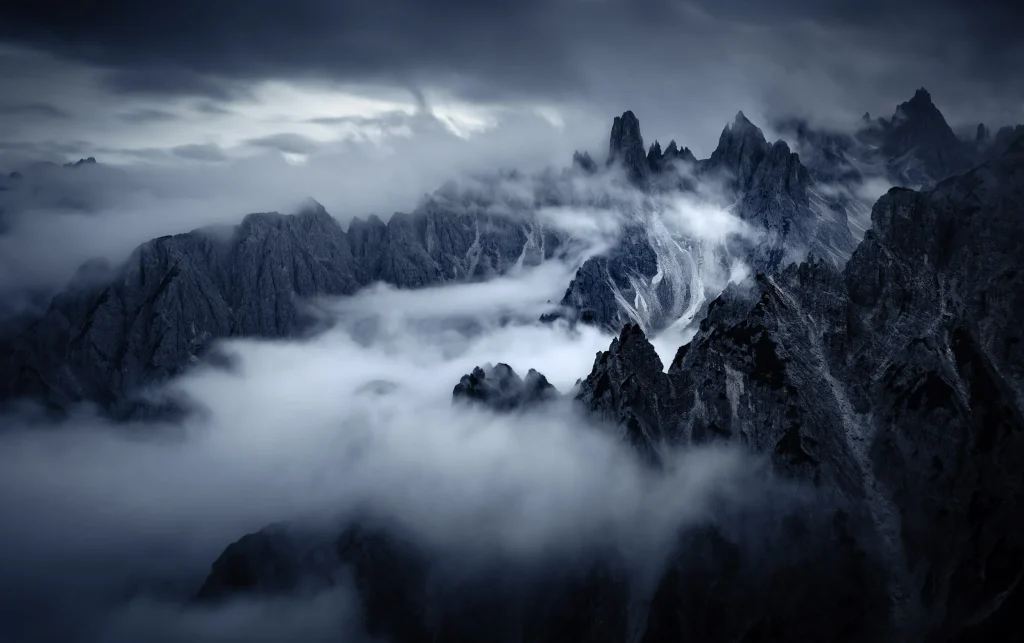
In literature, settings do more than provide a backdrop for characters’ actions—they mirror the emotional landscapes of the people who inhabit them. Writers often use physical spaces to convey psychological tension, unspoken fears, and inner turmoil. Mountains, forests, abandoned houses, or even the weather can become extensions of a character’s mind, amplifying their struggles and inner conflicts. Few contemporary works capture this interplay as powerfully as Naira Khan’s Mist And Unappeased Spirits Novel, where the rugged terrain of Mount Nyangani becomes more than a location—it becomes a character in its own right, reflecting the complexity of human emotion and the lingering echoes of unresolved trauma.
Mountains have long symbolized challenges, isolation, and transformation in literature. From classic works like Emily Brontë’s Wuthering Heights to modern mystical fiction, mountains serve as both literal and metaphorical obstacles. They are majestic yet intimidating, beautiful yet unforgiving. In Mist And Unappeased Spirits Novel, Mount Nyangani embodies this duality perfectly. The peak, shrouded in mist, reflects the confusion, fear, and hidden truths experienced by the characters, illustrating how the natural world can serve as a reflection of internal states.
The Mount Nyangani Mystery—a pivotal element of Khan’s story—exemplifies how a landscape can harbor secrets and mysteries that mirror the unresolved conflicts in the human psyche. The mountain’s foggy ridges and sudden storms are not just physical obstacles; they symbolize the emotional and psychological barriers that the characters face. As they navigate the treacherous terrain, readers are drawn into their inner worlds, understanding their fears, doubts, and moments of revelation.
Weather is another literary tool often used to externalize emotion. Storms, heavy rain, oppressive heat, or unyielding winds can mirror inner turmoil, enhancing tension or signaling change. In Mist And Unappeased Spirits Novel, the persistent mist around Mount Nyangani creates a sense of uncertainty and foreboding, echoing the characters’ confusion and apprehension. When the wind picks up or the clouds thicken, it parallels the characters’ escalating anxiety or internal conflict.
By using weather to reflect emotion, authors like Khan create immersive experiences. The environment becomes a silent narrator, communicating what words alone cannot. Readers begin to sense the characters’ emotional states instinctively, through the mood of the landscape, the sound of the wind, or the feel of the mist on their skin.
Remote or dangerous settings often force characters into introspection. Isolation—whether on a mountain, in a deserted village, or within a forest—provides space for reflection, confrontation, and emotional revelation. Mount Nyangani’s remote slopes push characters into moments of vulnerability, forcing them to grapple with their pasts, their fears, and their relationships.
This interplay between isolation and self-discovery is not unique to Khan’s novel. In classic and contemporary literature, remote landscapes consistently act as mirrors for characters’ emotional states. The physical distance from society and everyday distractions allows the inner self to emerge, often revealing hidden truths, unacknowledged desires, or suppressed trauma.
Natural features—mountains, rivers, valleys, and forests—often carry symbolic weight in storytelling. In Mist And Unappeased Spirits Novel, the mountain is both a literal setting and a symbol of the characters’ emotional journey. The climb represents the struggle to confront fear, uncover hidden truths, and achieve personal growth. Similarly, the mist symbolizes uncertainty, confusion, and the blurred lines between reality and perception.
By embedding symbolic meaning into landscapes, authors allow readers to engage with the story on multiple levels. The setting becomes an emotional barometer, providing subtle cues about a character’s state of mind without overt exposition. The physical journey across Mount Nyangani mirrors the psychological journey of the characters, intertwining external adventure with internal evolution.
One of the most effective ways authors reflect inner emotion through setting is by contrasting characters with their environment. In Khan’s novel, moments of calm or beauty in the landscape juxtapose with inner turmoil, emphasizing emotional tension. Conversely, chaotic weather often aligns with moments of psychological instability, creating a natural rhythm that reinforces narrative stakes.
These contrasts also serve to heighten empathy. Readers feel the dissonance between the serene or threatening landscape and the characters’ internal states. By experiencing the environment alongside the characters, readers gain a visceral understanding of the emotional stakes involved.
Incorporating cultural and folkloric elements into settings enriches emotional storytelling. In Mist And Unappeased Spirits Novel, African folklore in fiction is intertwined with the natural environment, imbuing Mount Nyangani with spiritual significance. The mountain becomes a repository for ancestral memory, unspoken histories, and local myths. This layering of folklore adds depth to the emotional resonance, showing how cultural context shapes perception, fear, and identity.
Settings infused with cultural meaning allow readers to experience the environment both literally and symbolically. The mountain is not only a physical challenge but also a spiritual and emotional one. By situating emotional states within a culturally rich environment, Khan amplifies the universality and specificity of human experience.
When authors use settings as mirrors of inner emotion, they engage readers in a dual journey: following the plot while simultaneously experiencing the emotional landscape. In Mist And Unappeased Spirits Novel, the mountain’s mysterious terrain, the shifting weather, and the folklore-infused environment invite readers to step inside the characters’ emotional reality.
Readers can feel the tension in the characters’ hearts as mist obscures the path ahead. They can sense anxiety as cliffs loom dangerously close or relief when a clearing reveals sunlight. The setting becomes an emotional conduit, bridging narrative and empathy in a seamless experience.
Aspiring authors can learn several lessons from the use of settings in novels like Mist And Unappeased Spirits Novel:
Make the environment active: Treat settings as participants, not just backgrounds.
Mirror emotion with natural elements: Weather, terrain, and spatial dynamics can externalize inner states.
Use cultural and symbolic layers: Integrating folklore or history deepens emotional resonance.
Balance contrast and alignment: Use harmony and dissonance between environment and character emotion to enhance tension.
Encourage reader empathy: Let the setting communicate psychological and emotional stakes, allowing readers to feel the narrative rather than just understand it.
By using these strategies, writers can create immersive worlds where every element—landscape, weather, sound—contributes meaningfully to character development and emotional depth.
Settings in literature are far more than passive backdrops; they are active participants in the story, capable of reflecting, amplifying, and even shaping a character’s inner world. Naira Khan’s Mist And Unappeased Spirits Novel demonstrates this masterfully, with Mount Nyangani serving as both a literal and symbolic landscape that mirrors the emotional complexities of her characters. The Mount Nyangani Mystery exemplifies how a place can carry emotional weight, cultural significance, and narrative power, creating a story where the environment and the human heart are inseparably intertwined.
Through careful attention to the emotional resonance of settings, writers can transport readers into characters’ minds, allowing them to experience landscapes not just visually, but psychologically and emotionally. Whether it’s the fog-shrouded peaks of a mountain or a quiet, mysterious forest, the spaces characters inhabit can become windows into their deepest fears, desires, and transformations. Khan’s work also draws inspiration from other literary landscapes, like The Mountain That Swallows People, showing how a setting can haunt, challenge, and reflect the inner life of characters, making every hill, mist, and shadow a reflection of the human soul.
By exploring the intricate relationship between inner emotional states and literary settings, readers and writers alike can appreciate the profound power of environment in storytelling, making every hill, mist, and shadow a reflection of the human soul.